Benefits of Personalized Senior Care for Aging at Home

Imagine your father sitting in his favourite armchair, listening to the radio just as he always has. A visitor arrives, but instead of disrupting his morning, they quietly start on the dishes and ask about the news. It's natural to feel a sense of worry or even guilt when you realize you can't manage everything alone. You want your parent to be safe, but you also want them to feel like themselves in the home they love. That's why personalized senior care plans are so vital; they ensure the help provided fits into a life already in progress rather than forcing a clinical routine onto a private sanctuary.
You'll discover how a tailored approach to home care protects your loved one's independence, dignity, and daily joy while creating a much calmer environment for your whole family. We understand the weight of these decisions and the desire to keep home feeling like home. This article explores how customized supports offer a reliable, gentle way to maintain safety and comfort without losing the personal touches that make life meaningful. By the end, you'll see how a thoughtful plan can replace family stress with a renewed sense of peace and connection.
Table of Contents
What is a Personalized Senior Care Plan?
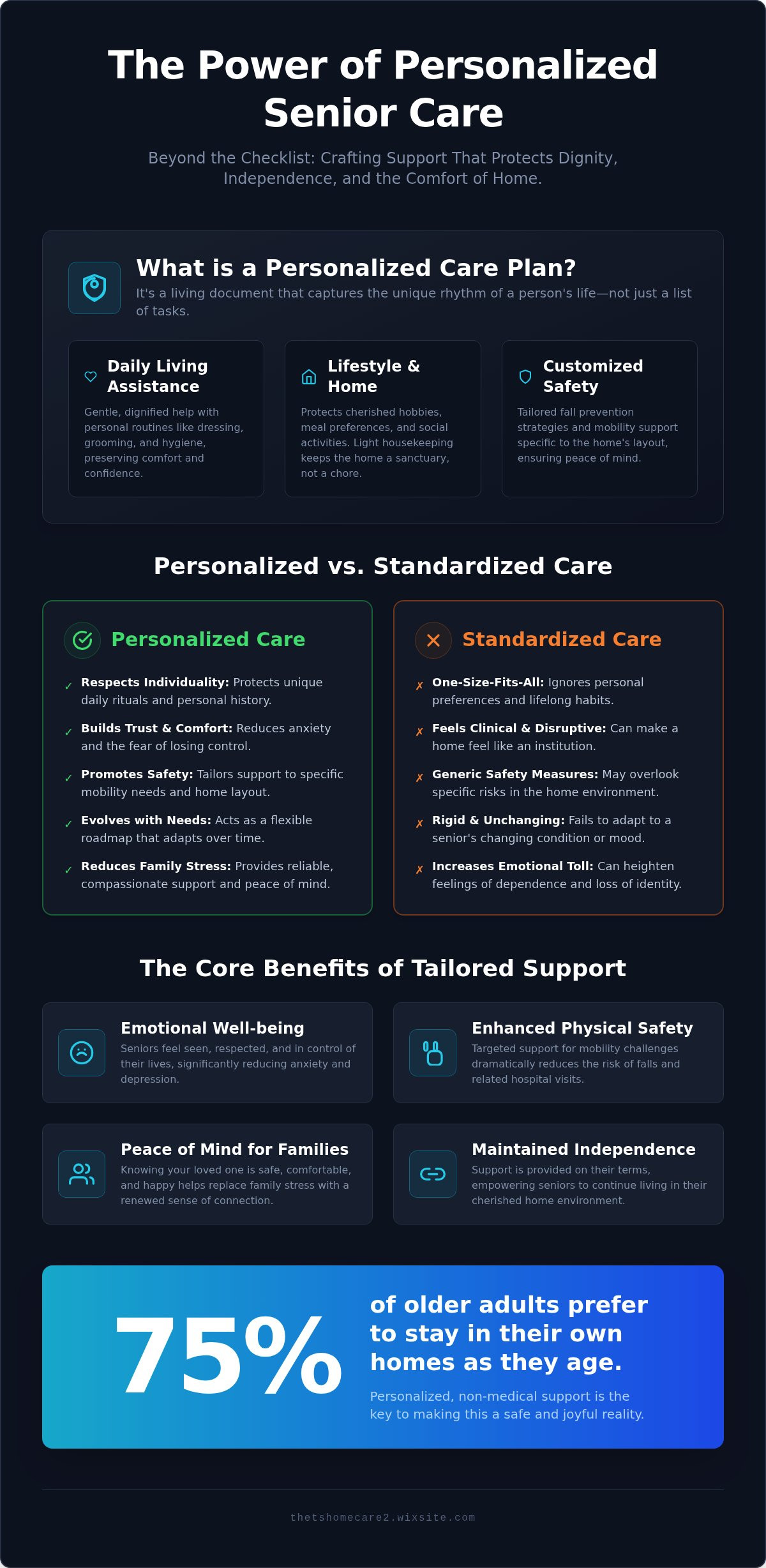
A personalized senior care plan is a living document that captures the unique rhythm of your parent's life. It isn't just a list of chores or a fixed schedule; it's a thoughtful guide to their physical, emotional, and social world. Many families often wonder what is home care and how it differs from institutional support. The answer lies in the shift away from a one-size-fits-all approach. While a medical chart tracks symptoms and clinical data, personalized senior care plans focus on the individual's history and heart. This person-centered approach has become the gold standard for Canadian families who want to support their loved ones aging in place. It ensures that help feels like a natural extension of their daily lives rather than a disruption.
This plan isn't static. It evolves as your parent's needs change, acting as a roadmap for both the caregiver and the family. It bridges the gap between professional competence and the warmth of a close friend. By documenting specific preferences, from how they like their coffee to the exact way they prefer their laundry folded, we protect the dignity of the senior. This level of detail builds immediate trust, helping families let go of the guilt they often feel when they can't provide every ounce of care themselves.
The Core Components of Individualized Support
True support looks at the whole person. It starts with daily living assistance, such as gentle help with dressing, grooming, or personal hygiene. These tasks are handled with a softness that prioritizes human dignity. Beyond physical needs, the plan incorporates lifestyle elements. We look at social hobbies, meal preferences, and the specific routines that bring joy. If your father enjoys a morning walk or your mother finds peace in her garden, those moments are protected. Safety protocols are also vital. We tailor fall prevention strategies to the unique layout of the Canadian home, ensuring every hallway and staircase is navigated with confidence.
Why "Non-Medical" Does Not Mean "Non-Essential"
It's a common misconception that care must be medical to be vital. In reality, companionship and personal care form the bedrock of senior health. A significant majority of older adults, approximately 75 percent, prefer to stay in their homes as they age. To make this possible, non-medical support is essential. Light housekeeping support maintains the home as a sanctuary, removing the weight of domestic chores. This allows the senior to focus on their well-being and independence. By focusing on domestic ease rather than clinical intervention, we help maintain the small moments that make a house feel like a home. This proactive support reduces the risk of safety incidents and ensures the home remains a place of stability and comfort.
The Emotional and Physical Benefits of Tailored Care
Choosing to age in place is a deeply personal decision rooted in the love for one's own space. When families implement personalized senior care plans, they aren't just hiring a helper; they're protecting the small moments that define a person's day. These rituals, like a specific morning tea or an afternoon radio program, are often the first things lost in a clinical environment. By centering care around these preferences, we ensure that your parent feels seen and respected. This tailored approach reduces the anxiety often felt by seniors who fear a loss of control. Knowing exactly who will walk through the door and what they will do brings a profound sense of relief to both the senior and their children.
Physical safety is a primary concern for most families. When assistance is tailored to specific mobility challenges, it significantly reduces the risk of falls and subsequent hospital visits. Research into Aging at Home highlights that environmental modifications and consistent support are key to maintaining health. A plan that accounts for the specific layout of a Canadian home, from steep stairs to narrow hallways, provides a level of protection that generic care simply cannot match. This allows seniors to receive the help they need on their own terms, preserving their dignity in the place where they feel most secure.
Maintaining the Home as a Sanctuary
The home should always feel like a private residence, not a mini-clinic. Personalized support keeps medicalized routines in the background, focusing instead on domestic ease. There is a significant psychological benefit to aging in a familiar, well-maintained environment. When order is maintained through light housekeeping, the home remains a sanctuary rather than a source of stress. A tidy kitchen or a freshly made bed can change the entire tone of a senior's day. If you're looking for ways to balance safety with comfort, you can explore our supportive home services to see how we help maintain that delicate balance through personalized senior care plans.
Social Connection and Mental Wellbeing
Isolation is one of the greatest risks to senior health, yet it's often overlooked. Companionship care that is tailored to a person's history and personality can transform their mental outlook. Whether it's discussing the news or sharing a hobby, these interactions fight the loneliness that often accompanies aging. Emotional security is directly linked to consistent, familiar caregiver routines. By fostering a genuine connection between the caregiver and the senior, the plan moves beyond tasks and becomes a source of daily joy. This steady presence replaces fear with friendship, ensuring your loved one feels connected to the world around them while staying safe in their own home.
Personalized vs. Standardized Care: A Comparison
It's natural to ask if a formal document is truly necessary for someone just helping with the dishes or a bath. You might feel that "simple help" shouldn't require a structured approach. However, without personalized senior care plans, support often becomes a series of well-intentioned guesses. Standardized care tends to be rigid, treating every senior like a set of tasks to be checked off a list. This generic approach carries hidden risks, such as disrupted sleep patterns, caregiver friction, and missed opportunities for emotional connection. When a caregiver doesn't know a senior's specific history or triggers, the home can quickly lose its sense of peace.
A tailored plan provides a clear "problem-and-peace-of-mind" cadence for your family. It identifies a specific worry, such as a parent's fear of falling in the shower, and follows it with a calming, practical resolution. There is strong Evidence on Personalized Care Planning showing that this method improves a person's ability to manage their health and enhances their overall psychological well-being. By addressing small needs before they escalate, you're investing in stability. Proactive support is far more cost-effective than reactive, crisis-driven interventions that often lead to expensive, unplanned hospital stays or premature moves to assisted living facilities.
Flexibility and Evolution
Standardized care is often a "take it or leave it" service that doesn't account for the ups and downs of aging. In contrast, personalized senior care plans are designed to be flexible. They allow you to scale support up or down based on your parent's current energy levels or health status. Whether you need a few hours of companionship a week or daily help with personal care, the plan evolves with you. Regular reviews ensure the care remains relevant, respecting the senior's changing preferences while maintaining the sanctuary of their home.
The Family Partnership
One of the most significant shifts occurs when a family moves from being the sole caregiver to a supported partner. A clear plan facilitates better communication between you and the care team. It removes the guesswork, allowing you to step back into your role as a daughter or son rather than a manager of tasks. We act as the knowledgeable guide you need during these transitions, providing steady strength and professional reliability. This partnership ensures that your parent's story remains at the center of their care, fostering a deep sense of security for everyone involved.
How to Identify What Belongs in Your Parent’s Care Plan
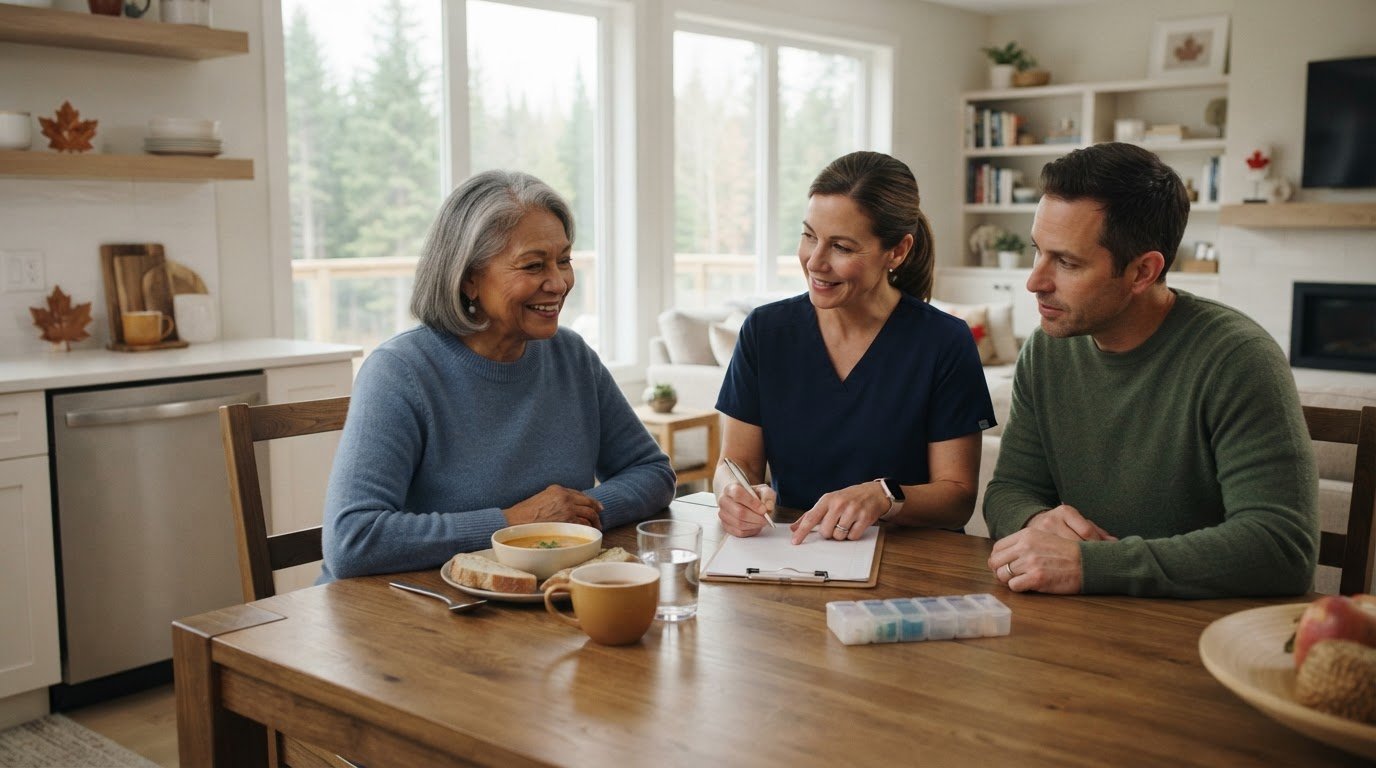
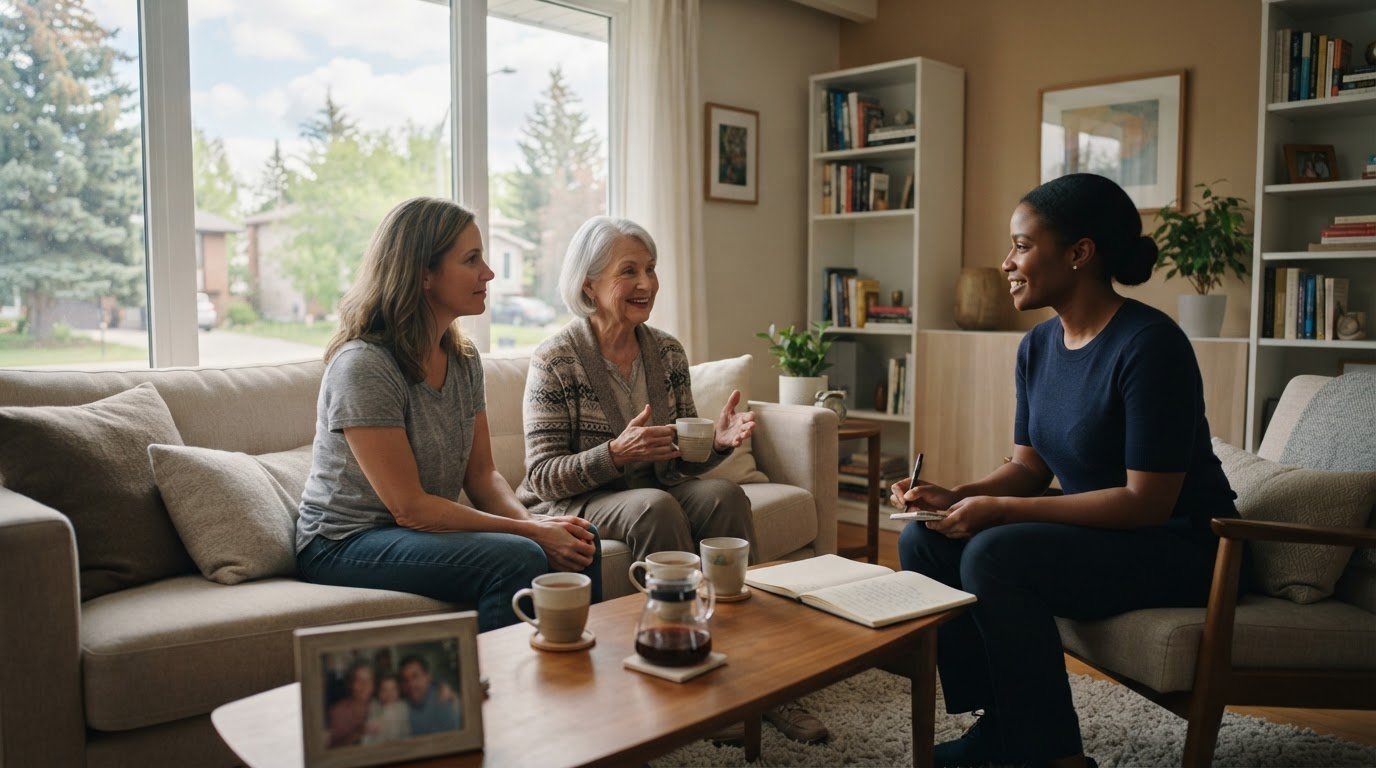
Building personalized senior care plans starts with a humble and warm assessment of your parent's daily life. This isn't about clinical checklists; it's about sitting down in their living room and listening. We look for the "gaps" in their routine, identifying where they struggle and where they still thrive. Perhaps your mother enjoys cooking but finds the heavy lifting of grocery bags too much. Or maybe your father loves his morning walk but feels unsteady on the porch steps. By noticing these subtle shifts, we can design support that fits like a glove, protecting the sanctuary of their home without making them feel managed.
Safety is always a priority, but it must be handled with gentleness. We assess the home environment for specific mobility aids that match the layout of the Canadian residence. This might include suggesting sturdy grab bars that blend into the bathroom decor or ensuring hallways are clear for easy navigation. Meal preparation is another cornerstone. We go beyond basic nutrition to include personal tastes and family traditions. If a certain Sunday roast or a specific way of preparing tea brings comfort, those details belong in the plan. To start building a custom roadmap for your loved one, you can get started with a personalized home care assessment today.
The "Daily Life" Audit
Mapping out a typical 24-hour cycle helps find points of friction that might otherwise go unnoticed. We look at the tasks that cause the most stress, such as bathing or managing laundry, and find ways to smooth those transitions. It's also important to recognize social needs. In a busy family schedule, meaningful conversation can sometimes take a backseat to physical care. A 24-hour audit ensures that social engagement is a planned part of the day, not an afterthought. This steady rhythm helps lower everyone's heart rate and replaces uncertainty with a clear, organized path forward.
Setting Realistic Goals for Independence
A successful plan focuses on what the senior can do, providing just enough support to handle the rest. We define success based on your family's unique needs, whether that's better nutrition, more social time, or simply a cleaner, more organized home. The goal of a care plan is to enhance, not replace, the senior’s autonomy. By setting these goals together, we create a sense of partnership between the family and the caregivers. This collaborative approach ensures that personalized senior care plans remain a source of strength and dignity for your parent, allowing them to remain the author of their own story.
The TS Home Care Approach: Your Compassionate Guide
At The TS Home Care, we believe that the best support feels like a natural extension of your family's love. We bridge the gap between professional competence and sincere empathy by treating every client as an individual with a unique story. Our commitment is to protect the sanctuary of the Canadian home, ensuring it remains a place of comfort and joy. Families across the country trust our methodical and unhurried rhythm of care because it respects the dignity of their loved ones. We don't rush through tasks; we focus on the person. This steady pace allows for the small moments to truly shine, whether that's sharing a laugh during meal preparation or a quiet conversation over tea.
The process begins with a warm, open conversation rather than a cold intake form. We want to understand what makes your parent smile and what worries keep you awake at night. This dialogue forms the basis of our personalized senior care plans, which provide a structured and reliable roadmap for the future. By focusing on the nuances of daily life, we turn uncertainty into an organized, thoughtful plan that brings peace of mind to the entire family. It's about more than just tasks; it's about preserving the lifestyle your parent has built over decades. We're here to ensure those routines remain intact while adding a layer of professional safety.
Getting Started with a Personalized Plan
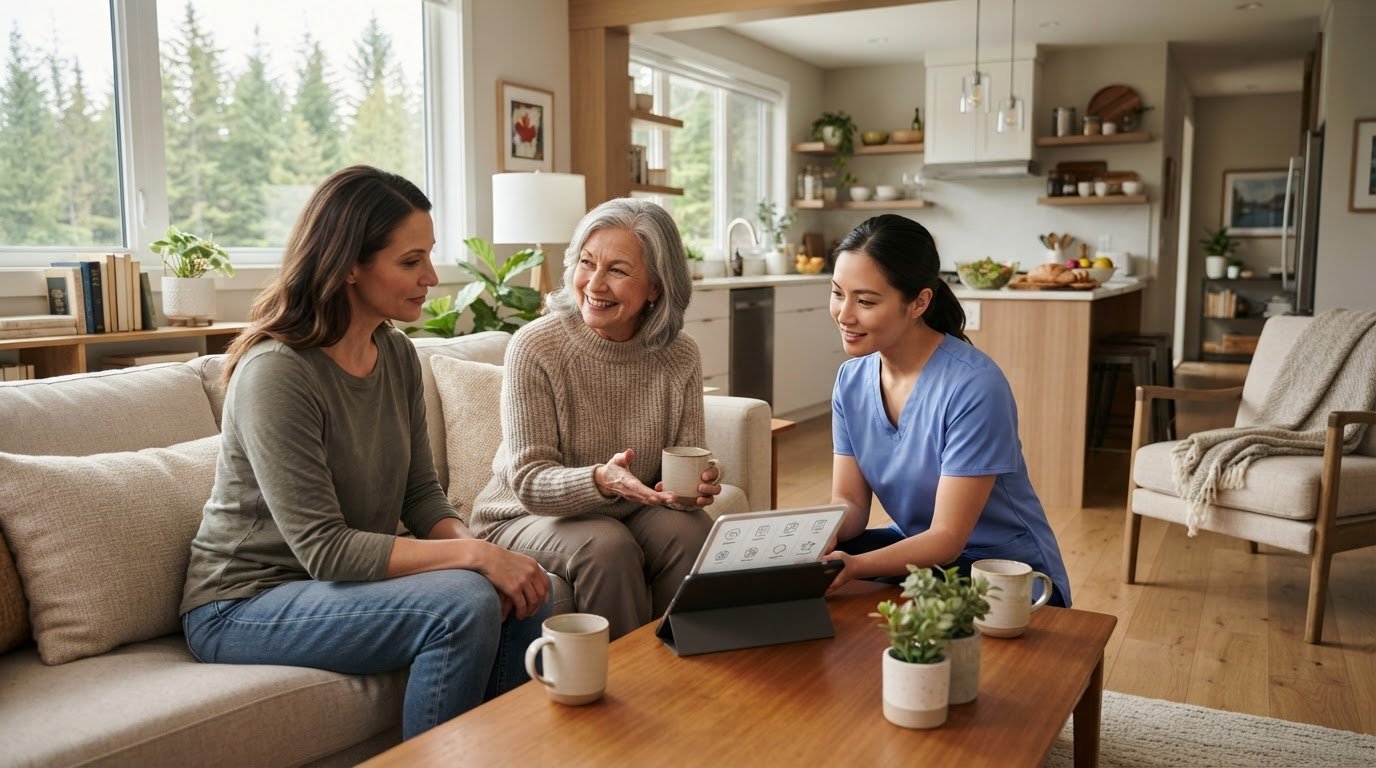
Moving from family care to external support is a significant transition. We prioritize a gentle hand during this shift, ensuring your parent feels empowered rather than overwhelmed. Our caregivers aim to become a trusted family advisor in the home, offering high-level expertise with the warmth of a close friend. This approach helps lower the heart rate of everyone involved, replacing anxiety with a sense of partnership. If you're seeking peace of mind today, the next step is simply to reach out for a conversation about how we can support your parent's existing lifestyle. We're here to guide you through the process with patience and presence.
Our Promise of Professional Reliability
Reliability is the foundation of trust. We maintain high standards of safety and dignity in every visit, ensuring that personalized senior care plans are executed with discipline and care. Whether it's assistance with personal care or light housekeeping, our recurring, scheduled engagements provide the stability seniors need to thrive. We believe that a clean, orderly home is essential for mental well-being, and our support ensures the domestic environment remains a source of pride. We are here to be your steady strength through every transition. Connect with a compassionate guide at The TS Home Care to begin your personalized plan and discover the difference that heart-led care can make.
Restoring Peace and Purpose to Your Family Home
Protecting a parent's independence doesn't have to be a solo journey filled with anxiety. By embracing personalized senior care plans, you ensure that every day remains rooted in dignity and the small rituals that make your loved one who they are. These custom roadmaps bridge the gap between necessary safety and the quiet comfort of a familiar routine. Whether it's through companionship that fights isolation or light housekeeping that maintains a peaceful environment, tailored support transforms the home into a true sanctuary. It replaces the heavy weight of family guilt with the steady strength of a professional partnership.
You don't have to navigate these transitions alone. With flexible hourly and per-visit support options, you can scale help to fit your family's specific needs and rhythm. Our focus remains on non-medical expertise that prioritizes the heart of the home and the well-being of the individual. It's time to move forward with a plan that respects your parent's history while securing their future. Begin a warm conversation about your loved one’s care plan today and take the first step toward a more joyful, reliable environment. We are here to guide you with the patience and presence your family deserves.
Frequently Asked Questions
What is the most important part of a senior care plan?
The most important part of a senior care plan is the preservation of your parent’s dignity and personal preferences. It moves beyond just listing tasks to capturing the "small moments" that make their daily life meaningful. By focusing on their unique history and routines, the plan ensures they feel respected in their own home. This human-centric approach turns a set of instructions into a compassionate guide for both the family and the caregiver.
How much does a personalized senior care plan cost in Canada?
The cost of in-home care in Canada varies depending on the province and the specific level of support required. According to current industry data for 2026, the national median hourly rate for non-medical caregiver services is C$35. While this provides a general benchmark, families often find that flexible hourly or per-visit options allow them to manage their budget effectively. It's best to check with local providers for specific rates tailored to your community.
Can we change the care plan if my parent’s health improves or declines?
Yes, these plans are designed to be living documents that evolve as your parent's needs change. Whether their health improves or they require more assistance, personalized senior care plans are regularly reviewed to ensure they remain relevant. This flexibility allows you to scale support up or down without disrupting the sanctuary of the home. It provides peace of mind knowing that the care provided always matches their current reality and energy levels.
How do you choose a caregiver that fits my parent’s personality?
Choosing the right caregiver involves a thoughtful matching process that looks at both professional skills and personal temperament. We consider your parent's hobbies, history, and even their sense of humour to find someone who feels like a natural fit. This connection is vital for building trust and ensuring the senior feels comfortable. By prioritizing personality, we turn a service provider into a trusted family advisor who understands the nuances of your loved one's life.
Is a personalized care plan necessary for only a few hours of help a week?
Even for just a few hours a week, a formal plan is essential to ensure consistency and safety. It removes the guesswork for the caregiver and provides a clear routine that your parent can rely on. Without a structured approach, small details like meal preferences or mobility risks can be overlooked. A plan ensures that every hour of help is purposeful and directly supports your parent’s independence while respecting their private space and existing habits.
What happens during the initial assessment for a care plan?
During the initial assessment, a compassionate guide visits the home for a warm, unhurried conversation. We walk through a typical 24-hour cycle to identify points of friction and areas where your parent thrives. This "daily life audit" helps us understand their specific needs and social goals. The result is a clear, organized roadmap that outlines exactly how we will protect their dignity while ensuring their physical safety in a familiar, stable environment.
How do personalized plans help with senior social isolation?
Personalized plans combat isolation by scheduling meaningful social engagement that matches your parent’s interests. Instead of just "sitting with" a senior, caregivers engage in conversation, share hobbies, or help them stay connected to their community. This steady presence provides emotional security and a sense of purpose. By integrating companionship into the daily routine, we ensure that your loved one feels seen and heard, which is vital for their overall mental well-being and daily joy.
Do personalized care plans include help with household chores?
Yes, personalized senior care plans frequently include light housekeeping support to maintain the home as a sanctuary. This can involve tasks like doing the dishes, laundry, or tidying living areas to remove the stress of domestic chores. By handling these physical tasks, we allow the senior to focus on their comfort and independence. Keeping the home environment clean and organized is a key part of ensuring it remains a safe, stable place for aging in place.
Comments