How to Arrange Home Care: A Step-by-Step Guide for Families

What if arranging help could protect your loved one’s independence rather than take it away? Learning how to arrange home care can feel daunting, especially when you’re unsure how to raise the subject or explain what’s becoming difficult day to day. Start with your loved one’s wishes and familiar routines. This makes the conversation more respectful and gives your family a practical place to begin.
It’s natural to worry that support might change the way someone lives. But help can fit around their preferences, offering assistance where it’s welcome while leaving room for the choices and routines that matter to them.
This step-by-step guide will help you open the conversation, identify daily needs and preferences, and plan a practical schedule. You’ll also learn about non-medical support, including personal care, companionship, meal preparation assistance, and light housekeeping, and what to consider as you plan next steps. A clear picture of what would help can make it easier for your family to explore support together.
Table of Contents
How to Arrange Home Care: Start by Understanding What Is Changing
Arranging help doesn’t have to mean changing your parent’s whole life. Start with one routine or task. If you’re wondering how to arrange home care, notice what has become harder and ask what kind of support your parent would welcome. The aim is to fit help around their abilities, preferences, and familiar routines, then revisit the plan as needs change.
Home care is support provided in a person’s home. Non-medical help can include personal care, companionship, meal preparation, or light housekeeping. Skilled nursing and other medical home health needs are different types of care. For a broader overview of home care and its different forms, see What is Home Care?
Arranging home care means identifying which daily tasks feel difficult, discussing the person’s wishes, and planning suitable support around their needs and routines.
Notice which everyday routines are becoming harder
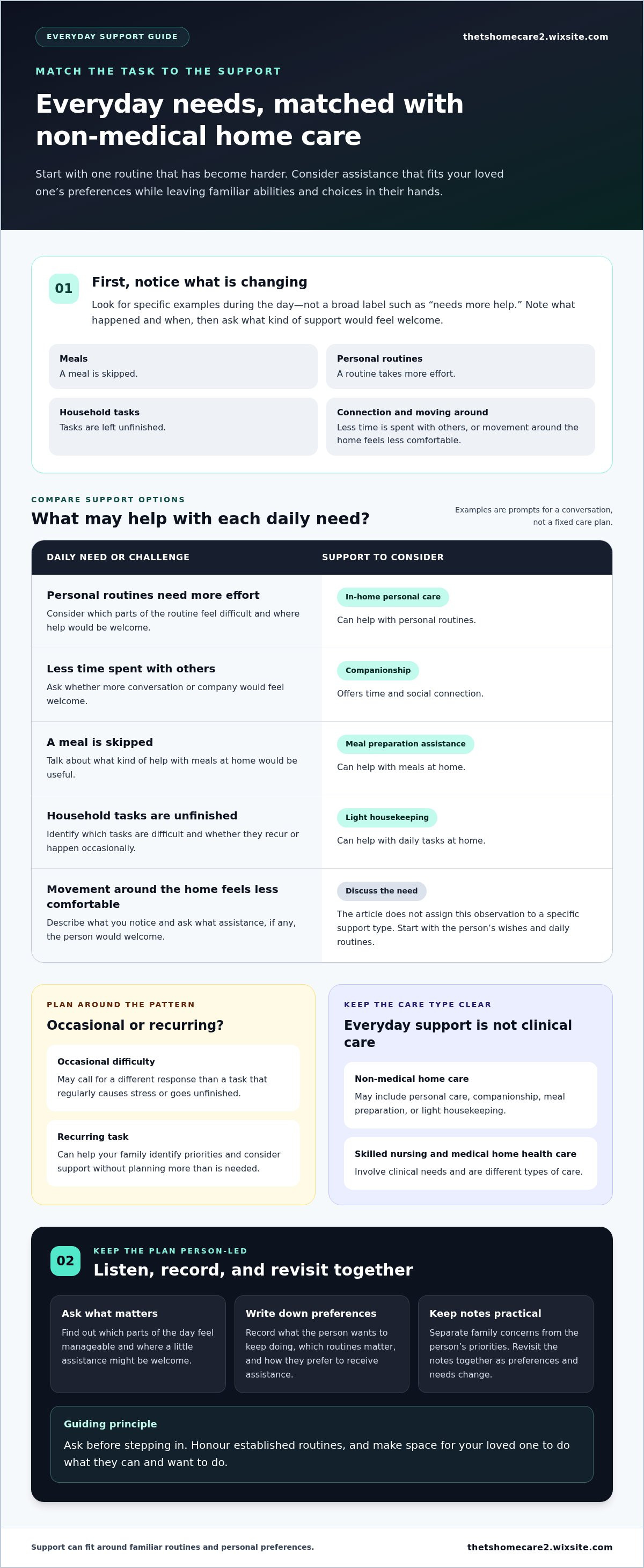
Look for specific changes throughout the day without treating every difficulty as a reason to take over. You might notice a meal being skipped, household tasks left unfinished, personal routines taking more effort, less time spent with others, or movement around the home feeling less comfortable. Note what happened and when. Specific examples are more useful than a broad label such as “needs more help.”
Next, distinguish occasional difficulties from recurring tasks. Something that becomes challenging once in a while may call for a different response than a routine that regularly causes stress or goes unfinished. This distinction helps your family identify priorities and consider support without planning more than is needed.
Understand what non-medical home care can help with
Everyday support can take several forms. In-home personal care can help with personal routines, while companionship offers time and social connection. Meal preparation assistance and light housekeeping can help with daily tasks at home. The right mix depends on what the person wants help with and what they can continue doing comfortably on their own.
Skilled nursing and medical home health care involve clinical needs, so they’re distinct from non-medical support. Being clear about that difference helps families focus on the assistance they’re seeking. Above all, support should respect dignity and choice: ask before stepping in, honour established routines, and make space for your parent to do what they can and want to do.
How to Talk About Home Care While Respecting Your Loved One’s Choices
Talking about support can bring up worries about privacy, independence, or losing control over familiar routines. Choose a calm, private time when neither of you is rushed or upset. A quiet conversation gives your loved one room to share their perspective, rather than feeling that a decision has already been made.
Begin by listening. Explain what you’ve noticed, then ask what might make daily life easier or more comfortable. Frame help as a way to keep valued routines within reach, not as a plan to take over. For example, meal preparation assistance can help with meals at home, while companionship can offer welcome conversation.
Invite your loved one into the conversation
Ask which parts of the day feel manageable and where a little assistance might be welcome. Offer choices about which tasks to discuss first, when support might fit into the day, and who should be involved in planning. These choices help your loved one shape the conversation and make their preferences clear.
Try prompts such as:
“Which parts of your routine are working well for you?”
“Is there one task you’d like a hand with?”
“What would make accepting help feel more comfortable?”
“Would you like to talk this through together, or take some time to think first?”
Your loved one may have questions or feel reluctant. Listen without arguing or treating a first reaction as a final answer. You can pause and return to the conversation later, at a pace that feels respectful.
Make a shared record of priorities and preferences
If your loved one is comfortable, write down what they’d like to keep doing, which routines matter to them, and how they prefer to receive assistance. Keep family concerns separate from their own priorities. For example, record “Parent wants to prepare breakfast independently” as a preference, and note a relative’s concern about missed breakfasts separately. Clear notes help you discuss support without blending different perspectives.
Keep the record brief and practical. It’s a starting point for planning, not a fixed set of instructions. Preferences and needs can change, so revisit the notes together and update them as needed. This shared approach can make how to arrange home care feel less like a decision made about someone and more like a plan shaped with them.
When you’re ready to explore everyday assistance, learn more about in-home support from The TS Home Care and consider what might fit your loved one’s priorities.
How to Match Home Care Support to Daily Needs and Schedules
Once you’ve identified what feels difficult, connect each priority with a type of non-medical support that may help. A task-by-task picture is more useful than assuming your parent needs a particular level of care. It keeps the plan focused on assistance they want while leaving familiar abilities and routines in their hands.
Match everyday tasks with the right kind of assistance
Use this guide to start a conversation about possible support. The examples are prompts, not a fixed care plan. Your parent’s preferences should shape what assistance feels useful.
Some needs are occasional, such as help with a particular task. Others recur as part of a morning, meal, or household routine. Companionship serves a different purpose: conversation and connection rather than completing a task. Skilled nursing or medical home health needs are clinical and require a different type of care from these everyday supports.
Choose a starting schedule that feels manageable
Start with the task, then consider when help would be most useful. Discuss whether support would fit best in the morning, around mealtimes, later in the day, or at another point in your parent’s routine. Identify the priorities first instead of assuming help must be daily or round-the-clock.
Which tasks matter most to your parent right now?
Are they occasional needs or part of a recurring routine?
What timing would feel comfortable and least disruptive?
Accepting help doesn’t mean giving up independence. Support can focus on chosen tasks, leaving your parent in control of the routines they want to continue. As you consider how to arrange home care, treat the schedule as something to revisit. Changes in comfort, routines, or support needs may call for a conversation and adjustments over time.
How to Prepare the Home and Coordinate Care Before Support Begins
A little preparation can make support easier to coordinate and more consistent with your parent’s preferences. Keep it practical: agree on the most important tasks, note relevant routines, organize useful information, and review the plan together. You don’t need to document every detail of daily life. Share enough for everyone to understand what has been agreed.
Create a practical home-care information sheet
With your parent’s input, prepare a brief sheet to guide everyday support. Use clear, respectful language and include only relevant information, such as:
The name your parent prefers to be called.
Routines or timing preferences that matter to the planned support.
Tasks they want help with and tasks they prefer to continue doing themselves.
Relevant household arrangements, such as where useful items are kept.
Keep instructions specific and easy to follow. “Prefers a quiet start to the morning” gives useful context without making assumptions. Avoid adding private details unrelated to the agreed support. Update the sheet with your parent as routines or preferences change, so it remains accurate and respectful.
Coordinate family communication and changing needs
Agree on who will gather questions and communicate changes. Having one family point person can help prevent relatives from sharing conflicting instructions. A shared record can also reduce the need for your parent to repeat the same information. Keep it simple: note the agreed priority, any change in routine, and when the family should review the plan.
Keep non-medical support notes separate from medical concerns. If a need involves skilled care or a health question, seek appropriate guidance from a health professional rather than treating it as an everyday household task. This distinction keeps the plan focused on the kind of support being arranged.
Before support begins, review the priorities, routines, and communication approach with your parent. Make sure the notes reflect their wishes, not only the family’s concerns. This gives everyone a shared reference point while leaving room to adjust as comfort and needs evolve. You can also explore in-home care options with The TS Home Care as part of your planning.
How to Begin Home Care with The TS Home Care
By now, you’ve started identifying which routines matter, where assistance may help, and what your loved one wants to continue doing independently. Bring those priorities into a conversation about support. A few clear examples, such as a household task that has become difficult or a routine where help would be welcome, can make practical next steps easier to discuss.
Bring your priorities into a home-care conversation
Share your notes in your loved one’s own words where possible. Explain which tasks they’d like help with, which routines they want to preserve, and what could make support feel comfortable. Family members can also raise practical concerns while keeping the conversation centred on the person receiving care.
You don’t need every detail settled before beginning. Start with the everyday priorities that matter most, then make room for questions and discussion. A thoughtful conversation can help everyone understand what kind of assistance is being considered and how it may support comfort, dignity, and independence.
Explore everyday support from The TS Home Care
The TS Home Care offers in-home personal care, companionship care, meal preparation assistance, and light housekeeping support. These services address different priorities: personal care for everyday personal routines, companionship for conversation and social connection, meal preparation assistance for meals, and light housekeeping for household upkeep.
As you consider how to arrange home care, focus on the support your loved one wants rather than assuming every task needs to change. Begin with one priority and develop the plan as preferences become clearer. Keep your loved one involved, and treat their questions and comfort as part of the process.
When your family feels ready, you can explore everyday home care support with The TS Home Care. Starting with a clear priority can help turn questions into a plan that reflects the person, their routines, and the assistance they value.
Take the Next Step at Your Own Pace
Learning how to arrange home care starts with listening to your loved one, noticing which routines could use support, and shaping a plan around their preferences. A concise record of priorities and practical notes can help your family discuss needs without losing sight of dignity and independence.
Support can focus on selected everyday tasks rather than changing everything at once. The TS Home Care offers in-home personal care and companionship, as well as meal preparation assistance and light housekeeping support. These services can address practical needs while respecting familiar routines and choices.
You don’t need every answer before exploring what might help. Explore in-home support with The TS Home Care and take the next step when it feels right for your family. A respectful conversation can be a meaningful beginning.
Frequently Asked Questions
How do I arrange home care for a parent?
To arrange home care for a parent, note specific daily tasks that have become difficult. Choose a calm, private time to talk and listen to what your parent prefers. Agree on helpful support, record routines and priorities, and organize relevant household details. If needs include medical or skilled care, seek appropriate health guidance alongside planning non-medical support.
When should a family consider arranging home care?
Consider discussing home care when everyday routines repeatedly feel difficult, tiring, or less manageable for your parent. This may show up in personal routines, meal preparation, household tasks, or opportunities for companionship. One difficult day alone doesn’t determine what support is needed. Notice patterns over time, ask what your parent wants, and plan around their priorities rather than waiting for a crisis.
Can someone arrange home care if their loved one is unsure?
Yes, you can open a conversation even if your loved one is unsure, while involving them in decisions wherever possible. Ask what feels difficult and what kind of help might feel comfortable. Offer manageable choices, such as discussing meal support before household help, and allow time to think. Avoid presenting care as an all-or-nothing decision. If decision-making or immediate safety concerns arise, seek appropriate professional guidance.
What information should I prepare before arranging home care?
Before arranging home care, prepare concise notes about routines where support may help, your loved one’s preferences, and when assistance would be most useful. Include household details relevant to the planned support, and agree on how family members will communicate changes. Keep the notes respectful and share only relevant information. This preparation can make an initial care discussion clearer without requiring every detail to be settled in advance.
Can home care help with meals and light housekeeping?
Yes, non-medical home care can include assistance with meal preparation and light housekeeping, alongside other everyday support. The TS Home Care offers both meal preparation assistance and light housekeeping support. To identify what may help, list the tasks that matter most to your loved one and consider how they fit into their routine. Keep their preferences central as you discuss what assistance would feel comfortable.
Is home care the same as home health care?
Not exactly. Non-medical home care can support everyday needs such as personal care, companionship, meal preparation, and light housekeeping. Home health care may involve medical or skilled services, which are different. In Canada, terminology and public pathways can vary by province or territory, so describe the support needed in plain terms and seek appropriate health guidance when medical care or skilled assistance is involved.
How often should home care visits be arranged?
There isn’t one schedule that suits everyone. Consider which tasks need support, when they happen, and what frequency feels comfortable to the person receiving care. Identify the most helpful routines and discuss an arrangement that feels manageable. Revisit the schedule if needs, preferences, or household routines change. The first plan can be adjusted over time rather than treated as fixed.



Comments