Home Care: A Gentle Guide to the First Visit

What if the first home care visit is less about taking over and more about learning what matters to your loved one? It’s natural to wonder what to expect from home care, especially if you’re unsure what to prepare or worry that accepting help could affect someone’s independence. A first visit is a chance to meet, talk about everyday needs and preferences, and explore support at a comfortable pace. The caregiver may ask about familiar routines and the kinds of help that would make daily life easier.
You can help your loved one feel at ease by making space for their questions and including them in the conversation. Their preferences matter, and support should fit around the parts of daily life they want to keep doing themselves. Personal care, companionship, meal preparation, and light housekeeping are examples of non-medical support. Medical home health care, by contrast, involves skilled clinical services.
This guide explains what may happen before, during, and after a first visit, which details may be useful to discuss, and how everyday help can fit into familiar routines. A few practical notes and an open conversation can help the visit feel less like a test and more like a respectful first step together.
Table of Contents
What to expect from home care during a first visit
A first home care visit is an introduction to the person, their home, their familiar routines, and the everyday support they’re considering. It gives the older adult and caregiver a chance to meet and discuss what would feel helpful. The conversation may cover preferences and practical needs rather than follow a fixed list of tasks. What to expect from home care depends on the person’s wishes and the support they’re seeking, so one first visit may feel quite different from another.
Non-medical home care is practical, personal support with everyday living, such as companionship, personal care, meal preparation, or light housekeeping. It doesn’t provide nursing or medical treatment, or replace medical home health care. These types of support sit within the broader idea of Home care, which can take different forms depending on a person’s needs. If medical care is also part of someone’s life, everyday support and clinical care have distinct roles.
What can a non-medical home care visit include?
Depending on the person’s needs and preferences, support may include personal care, friendly companionship, preparing a meal, or light housekeeping. One person might value help with a familiar household task; another may appreciate conversation and company most. These examples aren’t a checklist for every visit. The goal is to understand which kinds of help suit the person and their daily life.
Why the first visit is about comfort as well as practical help
Meeting someone new in your home can feel personal, especially when support involves private routines. A friendly introduction and an unhurried conversation can help everyone settle in and make it easier to share what feels comfortable. The person receiving care should have room to express preferences, ask questions, and choose how much they wish to discuss. Privacy and respect matter as much as getting practical details right.
Mixed feelings are understandable. Someone may welcome help with certain tasks and feel uncertain about others, or simply need time to adjust to a new person. That hesitation can be a useful starting point for a thoughtful conversation about boundaries, choices, and routines the person wants to maintain. The first visit is a shared introduction, not a test the older adult must pass.
How to prepare for the first home care visit without added stress
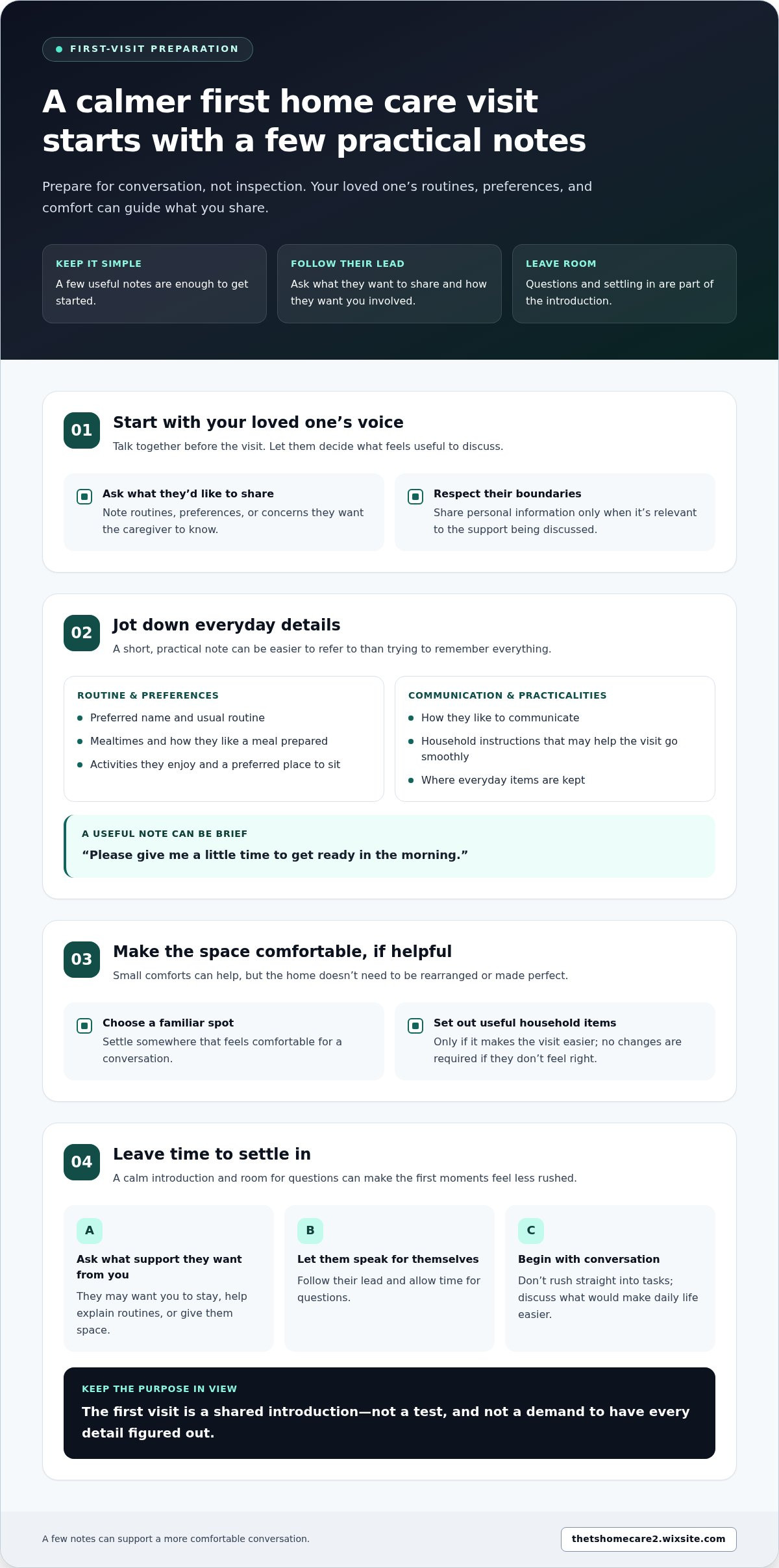
Preparing doesn’t mean getting the home ready for inspection or having every detail figured out. A few useful notes can make the visit feel more familiar while leaving room for conversation and questions. Start by thinking about what helps the person feel comfortable and what support they would welcome.
A simple sequence can keep preparation manageable:
Ask your loved one what they’d like to share. Talk together about the routines, preferences, or concerns they want the caregiver to know.
Jot down useful details. A short note about preferred names, mealtimes, communication style, or activities can be easier to refer to than trying to remember everything.
Make the space comfortable if helpful. Choose a familiar spot for conversation and set out household items that may be useful. There’s no need to rearrange the home or make changes that don’t feel right.
Leave time to settle in. A calm introduction and room for questions can help the first moments feel less rushed.
What information is helpful to share before the visit?
Focus on details that can make everyday support more comfortable: the name the person prefers, their usual routine, how they like to communicate, and activities they enjoy. You might mention a preferred place to sit or household instructions that will help the visit go smoothly. Share personal information only when it’s relevant to the support being discussed. A first visit doesn’t require sharing every private detail.
Keep notes plain and practical. “Please give me a little time to get ready in the morning” is more useful than trying to describe every part of the routine at once. A brief note about where everyday items are kept or how the person likes a meal prepared can also make those preferences easier to explain.
How can family members make the introduction easier?
Ask your loved one whether they’d like you to stay, help explain their routine, or give them space to speak for themselves. A supportive introduction might sound like, “We’re here to talk about what would make daily life easier,” rather than suggesting that someone needs to be corrected. Follow their lead, allow time for questions, and don’t rush straight into tasks.
Small comforts can help, but nothing has to be perfect. If you’re exploring practical, routine-based support, you can learn more about The TS Home Care’s everyday support.
What may happen during a home care visit
There isn’t one required script for a first visit. It may begin with a greeting and conversation, then move into discussing what kind of support feels useful. The caregiver and the person receiving care can talk through preferences before deciding whether to begin any agreed everyday tasks. Some visits may focus mostly on getting acquainted; others may include practical help if that feels comfortable and fits the arrangement.
Depending on the person’s needs and preferences, support may include personal care, companionship, meal preparation, or light housekeeping. For example, the person might prefer to talk over a cup of tea before asking for help with a meal, or explain how they like a familiar household task done. These are possibilities, not a promise that every service will happen during every visit. The person can say what they want help with and what they’d rather continue doing themselves.
How introductions and routines can shape the visit
A warm introduction and attentive listening can help a new interaction feel more familiar. The caregiver and client may discuss how the person prefers daily tasks handled, including what feels comfortable, what they’d like to do independently, and where they welcome assistance. If family members share background or observations, the older adult’s own perspective should remain central. Their voice helps guide the conversation.
Routines offer useful context, but they don’t need to be followed without question. A person might explain that they prefer to get dressed before breakfast or like to prepare part of a meal themselves. Sharing these preferences keeps the conversation grounded in the person’s everyday life rather than assumptions about what they need.
What families can notice without turning the visit into a test
Family members can pay attention to whether the exchange feels respectful and clear. Does the caregiver listen to the person’s answers? Are preferences treated as meaningful? Does the person have space to speak, ask questions, or change their mind? These observations can help families identify what felt comfortable and what may be worth discussing later.
Try not to judge the whole relationship by one meeting. A first conversation can feel awkward simply because everyone is getting acquainted. Notice which routines or kinds of support seem welcome and which may need more discussion. This is a chance to learn together, not a test the older adult or caregiver must pass. That flexible, person-led approach is at the heart of what to expect from home care.
After the first home care visit: reflect, share feedback, and adjust
Once the visit is over, give your loved one room to think about how it felt. They may have found something reassuring, useful, or unexpected. They may also need time before they can put their feelings into words. Feedback after an initial visit can help make future support more comfortable and better suited to the person’s preferences.
What questions can families gently discuss after the visit?
Keep the conversation open and unrushed. You might ask, “What felt helpful?” or “Was there anything you’d like handled differently next time?” You can also ask whether your loved one felt listened to and able to make choices. These questions invite specific feedback without asking them to approve or reject the whole arrangement on the spot.
Try to distinguish a practical concern from the understandable nerves of meeting someone new. For example, a preference for more privacy during a personal task is useful guidance. Feeling unsettled because the routine was unfamiliar may ease as the person gets more comfortable. Both reactions deserve patience, and neither needs to be dismissed.
When might the support plan need a conversation?
A discussion may help if daily needs change, a routine no longer feels comfortable, or a type of support isn’t working as hoped. Perhaps the person would prefer a different approach to a familiar task, or their priorities have shifted. Sharing these observations with the care team can open a conversation about how support might better reflect the person’s wishes.
An adjustment doesn’t mean the first visit failed. Finding a comfortable approach can take conversation, and the older adult should remain part of decisions about their everyday support. If concerns arise, describe what happened and what would feel better rather than focusing on blame. Clear, respectful feedback gives everyone a useful starting point.
As needs and preferences evolve, it can also be helpful to revisit the wider support arrangement. For now, consider what you’ve learned about what to expect from home care: the first visit is one introduction, and the person’s comfort and voice continue to matter afterward.
If you’re considering everyday support shaped around a loved one’s routines, explore home care support.
What to expect from The TS Home Care’s everyday support
Understanding what to expect from home care can help families see how practical support may fit into familiar routines. The TS Home Care offers in-home personal care, companionship, meal preparation assistance, and light housekeeping support. These are different forms of non-medical help. The right support depends on the person’s needs, preferences, and the arrangement, and not every visit needs to include every kind of help.
Everyday support that can make home routines feel easier
Personal care is support with daily living and should be approached with respect for a person’s dignity, privacy, and choices. The older adult can share what kind of help feels comfortable and which parts of their routine they want to manage independently.
Companionship offers attentive human presence and the opportunity for conversation or shared everyday moments. It can be meaningful simply to have someone listen and spend time together, without promising a particular health outcome. Meal preparation assistance can support ordinary mealtime routines, while light housekeeping can help with everyday household tasks. The value often lies in making a familiar day feel more manageable, not in changing the person’s home or habits.
Preferences help shape how support fits. Someone may have a usual time for meals, a preferred way to organize a task, or a desire to take part rather than have everything done for them. Sharing those details helps keep assistance personal and respectful.
Taking a comfortable next step with The TS Home Care
It may help to reflect on the moments in the day when support would make the greatest difference. Is it a personal routine, preparing meals, keeping up with light household tasks, or having friendly company? The older adult’s own thoughts are an important part of that reflection. Families don’t need to settle every detail at once; it’s reasonable to take time to consider the options.
A comfortable first step can begin with a simple conversation about what the person would welcome, what they’d prefer to keep doing themselves, and how their routines can be respected. Those everyday details offer a helpful starting point for understanding how support might fit.
You’re welcome to explore The TS Home Care’s services and consider which kinds of everyday support may feel most useful for your loved one.
Take the first step at your loved one’s pace
Knowing what to expect from home care can ease some uncertainty, but there’s no single way a first visit must unfold. It’s an opportunity to get acquainted, share what matters, and talk about support that fits the person’s routines. A few notes about preferences can help, and everything doesn’t need to be perfectly prepared.
Everyday support should keep your loved one’s voice and choices at the centre. After the visit, a gentle conversation about what felt comfortable or what could change can help guide future support. The TS Home Care offers in-home personal care, companionship, meal preparation assistance, and light housekeeping, with support shaped around individual needs and preferences.
If you’re ready to explore what may make daily routines easier, explore how The TS Home Care can support everyday routines. Start with a conversation about the help your loved one would welcome and the routines they want to maintain.
Frequently Asked Questions
What happens during the first home care visit?
The first visit offers time to meet, talk about daily routines, and discuss what support feels helpful. The caregiver and older adult may get acquainted before considering agreed everyday help, such as personal care or companionship. There isn’t one fixed sequence, and practical tasks may not begin right away. The person receiving support can ask questions, share preferences, and decide what feels comfortable.
How should we prepare for a home care visit?
Prepare a few simple notes about preferred names, routines, communication preferences, and the kinds of help your loved one welcomes. You might also set up a comfortable place to talk or point out useful household items. There’s no need to tidy the whole home or have every detail ready. Sharing what helps the person feel at ease is a useful place to start.
Should a family member stay during the first home care visit?
A family member can stay if that would help the older adult feel comfortable, but it’s best to ask how they’d like you to participate. You might help introduce familiar routines, offer context, or give them space to speak directly with the caregiver. Some people appreciate having family nearby; others prefer more privacy. Let the person receiving support guide your role as much as possible.
What if my loved one feels uncomfortable with a caregiver at first?
Feeling uneasy around someone new is understandable, and it doesn’t mean support can’t become comfortable. Give your loved one time to express what feels awkward or unfamiliar, without pressuring them to approve the arrangement straight away. A gradual introduction, respectful conversation, and attention to their preferences can help. Share practical concerns with the care team so they can be discussed thoughtfully.
Is home care the same as home health care?
Not necessarily. Home care can refer broadly to support provided at home, including non-medical help with everyday living. Home health care generally refers to clinical services, such as nursing or treatment, delivered at home. The TS Home Care offers non-medical support, including personal care and companionship. If someone needs medical care, that is a separate kind of support to discuss with their health-care professional.
What should we discuss after the first home care visit?
Ask your loved one what felt comfortable, useful, or unexpected, and whether they felt listened to and able to make choices. You could also ask if they’d like any routine approached differently next time. First-day nerves can differ from practical concerns, so give them time to reflect. Share clear feedback with the care team to discuss how future support can better fit their preferences.
Can home care help with meals and light housekeeping?
Yes. The TS Home Care offers meal preparation assistance and light housekeeping support as part of its everyday, non-medical services. The specific help should reflect the person’s needs and preferences, and not every visit necessarily includes every type of support. For example, someone may welcome help with a meal while preferring to manage other household routines themselves. Their choices help keep assistance personal and respectful.



Comments