Professional Home Care Guide for Canadian Families

Imagine the quiet relief of seeing your mother enjoying her morning tea in her favorite chair, knowing she's safe and still in the home she loves. For many Canadian families, the realization that they can't provide every ounce of care themselves often brings a heavy sense of guilt. It's completely natural to feel anxious about inviting someone new into your private sanctuary. However, seeking professional home care help isn't about giving up; it's about protecting your loved one's independence and your own well-being.
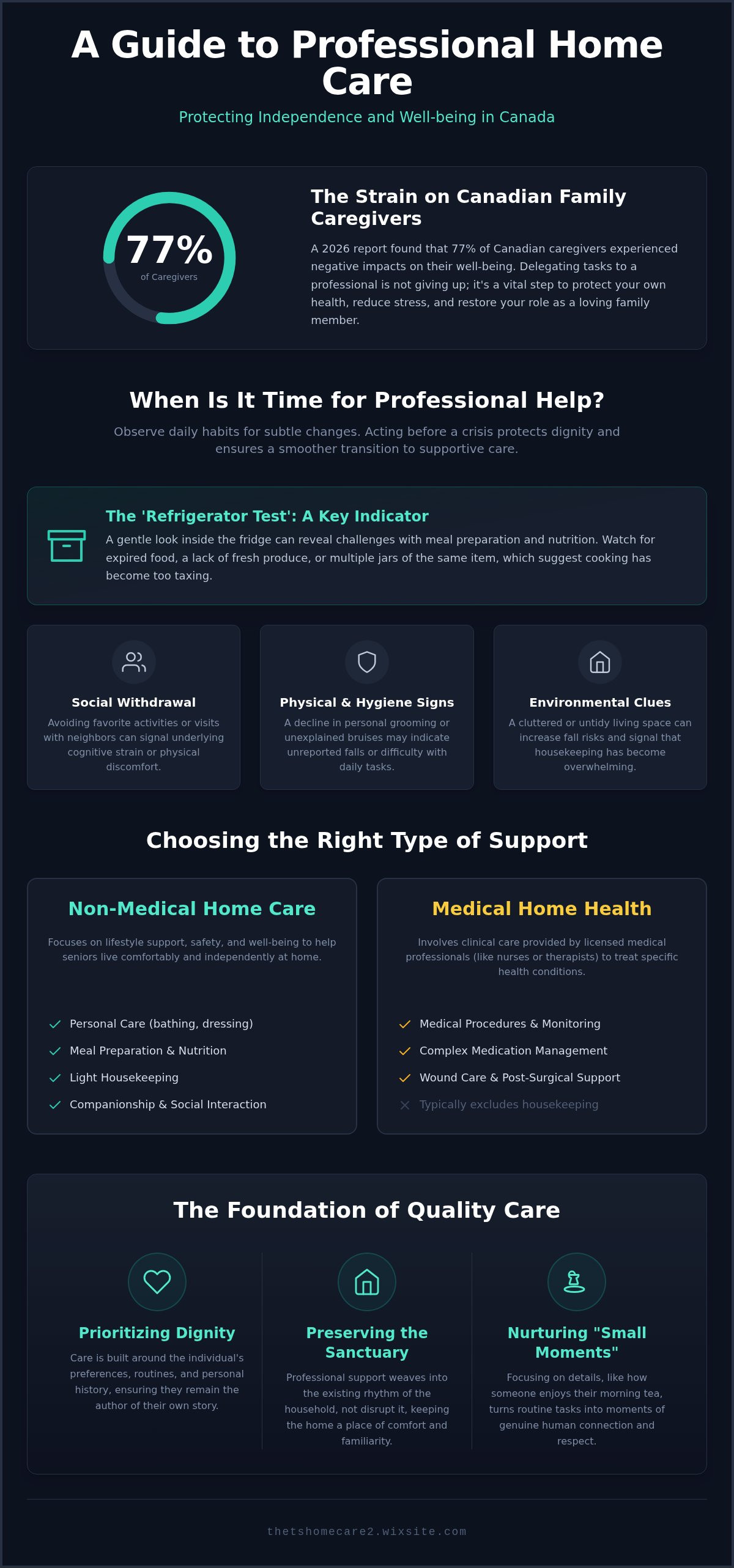
You likely want to maintain a familiar routine without the constant stress of safety concerns or the confusion of distinguishing between medical and non-medical support. With 77% of Canadian caregivers reporting negative impacts on their well-being in 2026, you aren't alone in needing a helping hand. This guide explains how to find compassionate, reliable support that fits your family's unique needs. We'll explore how to identify quality care, understand financial supports like the Canada Caregiver Credit, and ensure your home remains a place of comfort and dignity.
Table of Contents
What is Professional Home Care Help and How Does it Protect Independence?
Professional home care help is more than just a service; it's a way to ensure your loved one remains the author of their own story. At its core, this support is non-medical and takes place within the quiet comfort of a private residence. It's built on a philosophy that prioritizes human dignity. By focusing on well-being rather than just checking off tasks, it helps preserve the familiar environment of the home. This approach is vital because it prevents premature institutionalization and allows seniors to maintain a sense of control over their daily lives.
In our view, a home is a sanctuary. Professional support should never disrupt the existing rhythm of a household. Instead, it weaves into the client's established habits. Whether it's a specific way they like their tea or a preferred time for a morning walk, the care is designed around them. To better understand the scope of these services, it helps to look at the broader question of What is Home Care? and how it serves as a foundation for aging in place.
The Difference Between Clinical Care and Personal Support
It's easy to confuse medical home health with personal support. Clinical care involves nurses performing medical procedures or managing complex medications. However, most Canadian seniors primarily require lifestyle support to remain safely at home. This includes assistance with daily living, companionship, and household tasks. A caregiver acts as a helping hand to ensure safety and comfort, while a nurse focuses on a specific medical condition. For many families, this non-medical assistance is the most accessible and effective way to maintain a high quality of life. Common services include:
Personal Care: Assistance with bathing, dressing, and grooming.
Meal Preparation: Ensuring nutritious food is available and enjoyed.
Light Housekeeping: Keeping the living space tidy and free of hazards.
Companionship: Providing social interaction and emotional connection.
The Emotional Value of Professional Assistance
The weight of caregiving often strains family relationships. When you delegate physical tasks to a professional, you're free to step back into your role as a son, daughter, or spouse. This shift reduces the emotional weight that affects so many Canadian families. Beyond the physical help, professional support addresses the silent challenge of social isolation. Having a dedicated companion provides a reason to engage with the world again, turning a lonely afternoon into a moment of shared connection. Professional home care help acts as a vital bridge to independence for Canadian families, ensuring that the transition into extra support is a source of peace rather than a source of stress.
Recognizing the Signs: When is it Time to Seek Professional Help?
Identifying the need for support often feels like solving a puzzle with missing pieces. You might notice small changes that don't seem like much on their own, but together, they suggest it's time for professional home care help. Waiting for a crisis, like a fall or a sudden illness, often leads to rushed decisions made under stress. By observing your loved one's daily habits now, you can introduce professional home care help gradually, protecting their dignity while ensuring their safety.
One of the most effective ways to gauge well-being is the 'Refrigerator Test.' When you visit, take a gentle look inside. Are there expired cartons of milk or multiple jars of the same jam? A lack of fresh produce or a fridge full of frozen dinners can signal that meal preparation has become too taxing. Nutrition is a cornerstone of health, and these subtle shifts in eating habits are often the first indicators that a little extra assistance is needed to maintain a healthy lifestyle.
Social withdrawal is another significant red flag. If someone who once loved bridge or morning tea with neighbors starts staying inside, it's often a sign of underlying cognitive strain or physical discomfort. This isolation can accelerate cognitive decline, making a steady, social presence in the home more than just a luxury. It's a vital part of protecting their mental health.
Physical and Environmental Warning Signs
Changes in a loved one's appearance or their living space can be very telling. You might notice a decline in personal hygiene, such as unwashed hair or wearing the same clothes for several days. Look for unexplained bruises on their arms or legs; these often point to balance issues or 'near-miss' falls that go unreported. A home that was once spotless but now feels cluttered or dusty can also indicate that housekeeping has become overwhelming. Implementing personalized senior care plans helps address these specific environmental challenges before they escalate into safety hazards.
Cognitive and Emotional Indicators
Cognitive shifts are often more difficult to spot than physical ones. You might notice your parent becoming confused about their medication schedule or missing recurring appointments. Emotional changes are equally significant. If a social person suddenly withdraws from friends or expresses deep anxiety about being home alone, it's a sign that their world feels less secure. Professional companionship provides a steady, reassuring presence that can alleviate this fear. If you're noticing these patterns, it may be helpful to explore how a supportive partner in care can help restore a sense of calm to your family's daily life.
Comparing Your Options: Non-Medical Care vs. Home Health Services
Choosing the right type of support starts with a simple question: does your loved one need a medical procedure or a helping hand with daily life? Understanding this distinction is the first step toward finding the right professional home care help. While both services aim to keep seniors safe at home, they serve very different purposes. Non-medical care is often a more accessible entry point for Canadian families. It offers significant cost-effectiveness compared to skilled nursing, especially when needs are focused on lifestyle rather than complex clinical monitoring. This is particularly relevant given that a 2026 report found 49% of Canadian caregivers are struggling financially.
Flexibility is a major benefit of this approach. You can schedule support for just a few hours a day or a couple of visits a week, allowing the care to scale alongside your loved one's fluctuating needs. A well-structured Care Plan acts as the heartbeat of this arrangement. It coordinates different levels of support, ensuring that personal preferences are respected while safety remains a top priority. This plan isn't a static document; it's a living guide that adapts as your family's situation changes, providing a sense of organized, thoughtful planning.
Focusing on Daily Living: Non-Medical Support
This tier of support is designed to protect the sanctuary of the home. It focuses on the practicalities of domestic life that might have become challenging for a senior to manage alone. Personal care is delivered with gentleness, assisting with bathing, dressing, and grooming while prioritizing the senior's comfort and dignity. Homemaking services take the burden of light housekeeping and meal preparation off the family's shoulders. Beyond the house, caregivers provide transportation for errands and vital companionship, ensuring your loved one remains an active part of their community. By introducing professional home care help in these small moments, you preserve their independence without the disruption of a clinical environment.
When to Transition to Skilled Nursing
There are times when a helping hand isn't enough. If your loved one requires specialized medical attention, such as wound care, injections, or managing complex medical equipment, skilled nursing becomes necessary. These professionals focus on specific health outcomes and clinical stability. It's common for non-medical caregivers to work alongside nurses to provide a holistic environment. Non-medical care focuses on the overall quality of life while medical care focuses on health outcomes. This partnership ensures that even as medical needs increase, the emotional security and personal routine of the home are never lost.
How to Choose a Trustworthy Home Care Agency in Canada
Finding the right professional home care help is a journey that requires both your head and your heart. It isn't just about hiring someone to complete a list of chores; it's about finding a partner who respects the sanctuary of your home. Since there is no single national set of regulations for home care in Canada, the responsibility of vetting an agency often falls on the family. This process doesn't have to be overwhelming if you follow a methodical, step-by-step approach designed to build trust slowly.
The first step is to define your loved one's specific needs and their desired daily routine. Think about the small moments that make their day feel right. Do they enjoy a specific morning walk, or do they prefer a quiet afternoon reading? Once you have a clear picture, research agencies that prioritize heart-led, compassionate care. Look for organizations that speak about human dignity and emotional security, not just the technicalities of the service. When you conduct interviews, focus on personality and values. Ask yourself if this agency feels like a knowledgeable guide or a faceless corporation.
Before signing any agreement, review the care plan and the flexibility of the service. Life is unpredictable, and your support should be able to adapt without rigid penalties. Finally, we always recommend a 'soft introduction.' Start with a few hours of companionship or light help to let your loved one get comfortable with a new face in their home. This slow build helps replace anxiety with a sense of organized, thoughtful planning.
The Interview Process: Questions to Ask
During your initial conversation, move beyond the basics of scheduling. You want to understand the soul of the agency. Consider asking these specific questions to gauge their commitment to personalized support:
Personality Matching: How does the agency match caregivers to a client's specific personality and interests?
Evolving Needs: What is the process for updating the care plan as my loved one's needs or preferences change?
Philosophy of Care: Can you describe the agency's core philosophy regarding a senior's dignity and independence?
Safety and Reliability Standards
Professional reliability is the foundation of peace of mind. In Canada, provincial and territorial authorities manage home care differently, so you must verify that an agency conducts thorough background checks on all staff. Clear communication channels are also essential. You should know exactly who to call if a caregiver is delayed or if you have a question about the day's routine. A truly dedicated partner acts as a steady strength during the first few weeks of transition. If you're ready to take this step, you can find compassionate professional home care help that treats your family's story with the respect it deserves.
The TS Home Care Approach: Nurturing the Sanctuary of Home
At The TS Home Care, we believe that providing professional home care help is a sacred trust. We don't just enter a house; we enter a sanctuary where a lifetime of memories resides. Our approach is rooted in the deep belief that every senior deserves to feel secure, respected, and heard. This means our caregivers focus on emotional security just as much as physical safety. We prioritize the small moments that define a person's day, whether it's the specific way they like their laundry folded or the comfort of a familiar morning routine.
Our support is designed to be flexible because we understand the unique pressures facing Canadian families. We offer hourly and per-visit support that adapts to your budget and schedule without requiring long-term commitments. We're here to be a heart-led partner, ensuring your loved one's independence remains intact. Seeking professional home care help is a way to protect the existing lifestyle of your family while providing the professional support needed for domestic ease. We believe that care should feel like a natural extension of the family's own love and attention.
Personalized Support for Every Stage
We meet our clients exactly where they are in their journey. Some families only require light companionship to break the cycle of social isolation. Others need more comprehensive personal care, including assistance with bathing and grooming. Regardless of the level of support, our goal is to protect the existing lifestyle of the senior. We don't come in to change things; we come in to make the current routine easier and safer. This professional, compassionate presence provides a layer of peace of mind that allows you to focus on simply being a family member again.
Getting Started with a Gentle Hand
The transition into extra support shouldn't feel rushed or clinical. Our process begins with an unhurried conversation where we listen to your story. We work with you to create a care plan that feels like a true partnership, reflecting the nuances of your loved one's personality and preferences. Communication is the foundation of our work. We maintain open, accessible channels so you're always informed and involved in the care process. If you're feeling the weight of caregiving, we invite you to connect with us. A supportive consultation is the first step toward restoring balance and comfort to your home.
Restoring Peace and Comfort to Your Home
Choosing to seek support is a brave step toward honoring your loved one's desire to age in place. By understanding the difference between medical needs and lifestyle assistance, you can make an informed choice that preserves their dignity and your family's bond. We've explored how identifying subtle signs early and choosing an agency with a heart-led philosophy can transform a stressful transition into a source of stability. Finding the right professional home care help ensures that your home remains a sanctuary, not a clinical space, where personal routines are celebrated and respected.
At The TS Home Care, we're dedicated to being your knowledgeable guide. We offer personalized care plans tailored to your loved one's specific routine and flexible hourly support across Canada to meet your family's needs. Our heart-led caregivers focus on dignity and independence in every interaction, ensuring your loved one feels seen and valued. It's time to move from the weight of caregiving back to the joy of being a family again. Discover compassionate support with The TS Home Care today and take the first step toward a more balanced, peaceful daily life. You don't have to walk this path alone.
Frequently Asked Questions
What is the difference between home care and a long-term care home?
Home care allows a senior to stay in their own residence while receiving tailored support. Long-term care homes are residential facilities that provide 24/7 supervision and medical oversight in a communal setting. Professional home care help focuses on preserving the sanctuary of the home and maintaining a familiar routine, whereas long-term care involves moving into a clinical environment away from one's personal space.
Can I hire a professional caregiver for just a few hours a week?
Yes, support is designed to be completely flexible. Many Canadian families start with just a few hours a week for companionship or light housekeeping. This "soft introduction" allows your loved one to build trust with a caregiver at their own pace. You can easily adjust these hours as needs change, ensuring the support always fits your family's specific lifestyle and budget.
Is professional home care covered by provincial health insurance in Canada?
Coverage varies significantly between provinces and territories. While some basic personal support may be funded through provincial health authorities, many families choose private care to avoid long waitlists or to receive more personalized attention. You may also be eligible for federal support like the Canada Caregiver Credit or the Medical Expense Tax Credit to help offset the costs of out-of-pocket care expenses.
How do I convince my parent that they need help at home?
Start by framing the conversation around independence rather than "help." Focus on how a caregiver can handle tiring chores, like meal prep or laundry, so your parent has more energy for the activities they love. Emphasize that having a professional in the home is a way to ensure they can stay in their own sanctuary safely for as long as possible.
What happens if our assigned caregiver is not a good personality match?
A reputable agency will prioritize finding a personality match and will facilitate a change if the connection doesn't feel right. Building a bond of trust is essential for emotional security. If you feel the chemistry is missing, simply speak with your care coordinator. They'll work with you to find a different professional who better aligns with your loved one's interests and temperament.
Does home care include help with grocery shopping and meal prep?
Yes, assistance with daily nutrition and errands is a core part of professional home care help. Caregivers can help with creating grocery lists, shopping for fresh ingredients, and preparing nutritious meals that follow your loved one's preferences. This ensures they eat well without the physical strain of standing in a kitchen, which is a key indicator of overall health and well-being.
How quickly can professional home care help be started?
While the timeline depends on your specific location, support can often begin within a few days of an initial consultation. The process starts with a personalized care plan to ensure safety and comfort from the very first visit. This unhurried but efficient start allows families to replace uncertainty with a sense of organized planning and immediate relief for their loved ones.


Comments