Senior Home Care Visit Rates in Canada: A Comprehensive 2026 Guide

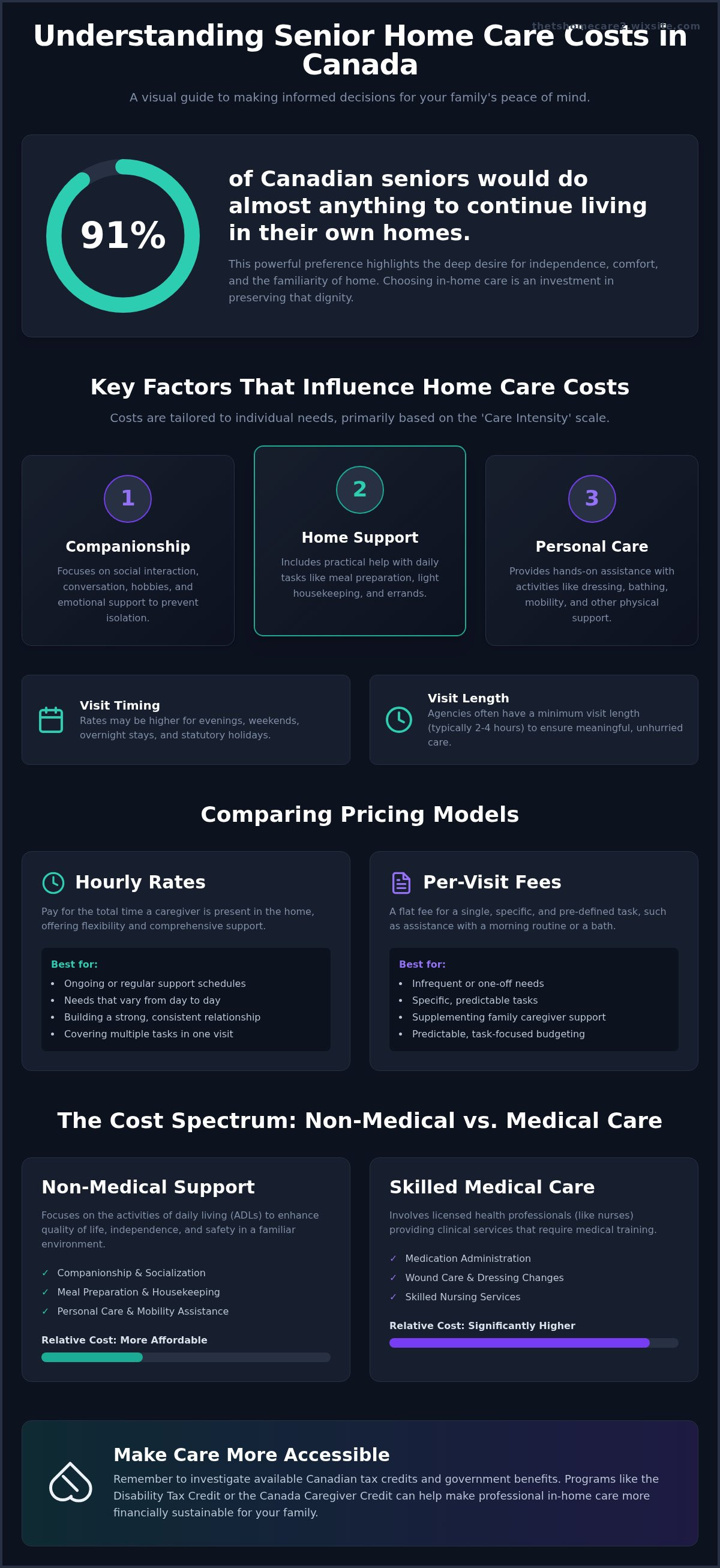
Did you know that 91% of seniors in Canada would do almost anything to stay in their own homes rather than move to a facility? It's a powerful number that reflects a deep desire for independence and the comfort of familiar surroundings. Choosing to bring someone into that sanctuary is a big decision. You might feel a bit of guilt for needing help, or perhaps you're worried about how senior home care visit rates will fit into your family's monthly budget. It's natural to feel overwhelmed by different billing models and the fear of hidden fees or long-term contracts.
This guide will help you understand how care is priced across the country so you can make a decision with total confidence. We want to help you find the perfect balance between professional support and your financial reality. We'll break down national averages, explain how to weigh the cost against the value of independence, and give you a clear plan to begin care without any surprises.
Table of Contents
Understanding Senior Home Care Visit Rates in Canada (2026)
Choosing to keep a loved one at home is a deeply personal decision rooted in warmth and respect. In 2026, the trend of "aging in place" has become the preferred lifestyle for the vast majority of Canadian seniors. Most people want to stay where their memories live, surrounded by the comfort of their own furniture and routines. When you begin this journey, you'll likely encounter the term senior home care visit rates. This simply refers to the professional fee for non-medical support provided within the home environment. It covers essential services like personal care, companionship, and help with daily tasks that keep a household running smoothly.
Navigating the financial side of care can feel heavy, but it's helpful to see budgeting as a proactive act of love. You're not just managing an expense; you're investing in your family's peace of mind and your loved one's dignity. A deeper understanding of home care clarifies that while provincial governments provide some subsidized services, they often fall short of meeting every need. Private-pay home care offers the flexibility to fill those gaps, ensuring your parent or spouse never feels like just another number in a crowded system.
Why Rates Vary Across Canada
Every care plan is as unique as the person it serves. Several factors influence the final hourly fee. A caregiver's level of experience and specialized training in areas like personal care often impacts the rate. If a care plan is complex and requires a high degree of coordination, the senior home care visit rates will reflect that level of professional oversight. The frequency of visits also matters. Some families find comfort in a daily routine, while others may only need a few hours of support each week to assist with meal preparation or light housekeeping. This flexibility allows you to scale support as needs change over time.
The Difference Between Medical and Non-Medical Care Costs
It's helpful to understand that non-medical care is generally more affordable than skilled nursing or medical home health services. Non-medical support focuses on the "small moments" of daily life that make a house feel like a home. This includes companionship, meal prep, and keeping the living space tidy. Many families start with companionship care as a way to preserve independence. It provides a steady, reliable presence that prevents isolation without the clinical atmosphere of medical intervention. We believe the home should be a sanctuary. By focusing on non-medical support, you can maintain that sense of stability and safety while managing costs effectively.
Key Factors That Influence Your Home Care Costs
Understanding what shapes your monthly invoice helps remove the mystery from home care. While many families look for a single number, the reality is that care is a living, breathing service that adapts to your loved one’s needs. One of the biggest drivers of senior home care visit rates is what we call the 'Care Intensity' scale. If your parent needs help with physical tasks like getting dressed or moving safely from room to room, the visit requires a different level of focus than a session centered on conversation and shared hobbies. These physical requirements often demand a more specialized skill set from the caregiver.
Service breadth also plays a vital role. Some families find that a visit is most effective when it combines companionship with practical help, such as meal preparation or light housekeeping. Adding these layers ensures that the home remains a comfortable sanctuary without overwhelming the senior with too many different providers. Timing is another factor to consider. You might notice that rates shift slightly for overnight stays, weekends, or statutory holidays. Additionally, most agencies maintain a minimum visit length, typically between two and four hours. This isn't about billing more; it's about ensuring the caregiver has enough time to truly connect and provide high-quality support without rushing through the door. Supporting your loved one's desire for Aging with Dignity in Canada means looking at the whole picture of their daily life.
Personalized Care vs. One-Size-Fits-All
A tailored care plan is often more cost-effective because it focuses resources exactly where they're needed. Instead of paying for a generic checklist, you're investing in a routine that respects your parent's unique preferences. We find that the 'small moments'-like knowing exactly how someone likes their morning tea or which path they prefer for a garden walk-make a world of difference. Consistency is the hidden value here. Having the same familiar face visit each week builds a bond of trust that a rotating staff simply can't match. If you're curious about how a custom plan might look, you can explore our personalized approach to see how we prioritize these connections.
Travel and Administrative Fees
Transparency is the foundation of a good partnership. You should always feel comfortable asking about common additional costs during an initial consultation. In some cases, there might be travel stipends for caregivers visiting rural areas, or a one-time fee for a comprehensive initial assessment. Administrative fees are the costs associated with managing caregiver safety, ongoing training, and the logistics of reliable scheduling. When you understand these factors, you can plan your budget with a clear heart, knowing exactly where your investment is going. Knowing the senior home care visit rates upfront allows you to focus on the care itself rather than the paperwork.
Comparing Hourly Rates vs. Per-Visit Fees for Senior Support
While government waitlists for subsidized care can stretch for months, private options allow you to choose a billing structure that fits your life right now. Understanding the difference between hourly and per-visit models is key to managing your expectations and finding a sustainable path forward. The hourly model is often the most popular choice for families needing extended support. It provides a steady, predictable rhythm where a caregiver can help with personal care, move on to light housekeeping, and finish the visit with a shared meal or a walk. This model makes it much easier to establish a predictable weekly budget, as you simply multiply the scheduled hours by the senior home care visit rates.
The per-visit model, by contrast, is designed for specific tasks. It’s ideal for quick check-ins, medication reminders, or simple meal preparation. You might wonder if a per-visit fee is more expensive than an hourly rate. On a per-hour basis, it sometimes is; the agency must account for the caregiver's travel and administrative time for a shorter window. However, if your loved one only needs a 30 minute check-in, a per-visit fee might be more economical than paying for a four hour minimum required by many hourly agencies. It’s all about matching the service to the actual need of your home sanctuary.
Which Model Fits Your Family's Routine?
Every family has a different story, and your care model should reflect that. Consider these common situations to see which path feels right for your home:
Scenario A: A working family needs four hours of coverage every afternoon to ensure their parent is safe and engaged while they finish their workday.
Scenario B: An independent senior lives alone and simply needs a one hour visit in the morning to help with meal preparation and starting the day with a friendly conversation.
Scenario C: A senior returning home after a minor surgery requires intensive, short-term hourly care to manage their recovery safely before transitioning back to occasional check-ins.
Calculating Your Monthly Home Care Budget
Estimating your monthly costs doesn't have to be a source of stress. Start by identifying the number of hours or visits your loved one needs each week. Once you have that number, multiply it by four to get a monthly baseline. We always recommend adding a small "care buffer" to your plan. This helps cover those unexpected moments, like an extra visit during a family emergency or a holiday week. Using a personalized care plan is the best way to keep your senior home care visit rates focused on essential needs. By prioritizing the most impactful support, you ensure your investment directly enhances your loved one's well-being and independence.
How to Evaluate Value and Manage Home Care Expenses
When you look at an invoice, it's easy to focus only on the numbers. However, we encourage families to consider the "cost of inaction." A single fall or health crisis can lead to expensive hospital stays and long-term rehabilitation. In comparison, senior home care visit rates represent a preventive investment that keeps your loved one safe in their own sanctuary. By having a professional present to assist with mobility or meal preparation, you significantly reduce the risk of these life-changing events. It's about protecting the life they've built.
There are also practical ways to make this support more sustainable. The Canadian Caregiver Credit is a non-refundable tax credit designed to help families manage these costs. For the 2025 tax year, caregivers could claim up to $8,601 for an adult dependent; checking the 2026 status with your financial advisor is a smart step in your planning. You can also optimize your budget by grouping tasks. Instead of scheduling several short check-ins, combining light housekeeping and meal prep into one block of time is often more efficient. This approach ensures the caregiver can settle into a rhythm with your loved one, focusing on the small moments that truly matter.
Beyond the finances, the emotional return on investment is profound. Professional care reduces the heavy weight of caregiver burnout for family members. It allows you to return to being a daughter or a son rather than a full-time care coordinator. This shift protects the senior's dignity and keeps the family bond strong. If you're ready to see how this balance can work for your family, book a personalized consultation to discuss your specific situation.
Asking the Right Questions During a Consultation
A transparent agency will always welcome your questions with warmth and clarity. During your initial talk, use this checklist to ensure you feel completely comfortable with the arrangement:
Are there specific cancellation fees or required notice periods?
Is there a long-term contract, or can we adjust care as needs change?
How do you match caregivers with our parent's unique personal story?
Be cautious of rates that seem significantly lower than the national average. Pricing that feels "too good to be true" often indicates a compromise on caregiver safety, thorough training, or long-term reliability.
Long-Term Planning for Aging in Place
Planning for the future doesn't mean you have to jump into intensive care immediately. A gradual approach is often more sustainable for both the senior's comfort and the family budget. You might start with just a few hours of companionship each week and slowly increase support as life evolves. Respite care is a wonderful way to do a trial run. It lets you see how a caregiver fits into your family dynamic without a long-term commitment. Pairing this support with a home safety checklist helps keep the environment secure. This proactive step can often reduce the need for more intensive physical assistance later on, keeping your senior home care visit rates manageable over the long term.
Choosing The TS Home Care: Transparent Support for Your Loved Ones
At The TS Home Care, we understand that inviting someone into your home is an act of profound trust. It’s why our philosophy centers on a unique blend of professional reliability and the genuine warmth of a close friend. We don't just see a schedule; we see a person with a lifetime of stories and preferences that deserve respect. Our heart-led approach means we pay attention to the nuances that others might overlook. Whether it's the specific way a bed is made or the exact time your parent enjoys their afternoon walk, these details are the foundation of our care.
We believe that financial clarity is essential for your peace of mind. When you research senior home care visit rates, you shouldn't have to worry about hidden fees or complicated long-term contracts. Our commitment to transparency ensures that you know exactly what to expect from the very first visit. We provide unhurried, compassionate support that focuses on quality rather than a simple checklist. By removing the stress of billing surprises, we help you focus entirely on the well-being of your loved one during this important transition.
Our Focus on the Home as a Sanctuary
Your parent’s home is more than just a building; it’s a sanctuary where they feel most like themselves. Our mission is to protect and enhance their existing lifestyle rather than disrupting it. The TS Home Care difference lies in our emphasis on the "small moments" of daily comfort. We find that a familiar routine provides a sense of emotional security that is vital for well-being. Our caregivers act as compassionate advocates for your family, listening closely to your needs and adapting our support as life changes. We are here to ensure that your home remains a place of joy and stability.
Get Started with a Compassionate Care Discussion
The first step toward support should never feel like a sales pitch. Our first conversation is dedicated to listening to your story and understanding the specific challenges your family is facing. We take the time to learn about your parent's personality, their daily habits, and your family's budget. Together, we build a care plan that respects your financial reality while providing the highest standard of non-medical support. We'll help you navigate senior home care visit rates and scheduling options with a gentle, steady hand. If you're ready to explore how we can support your family's journey, connect with us today for a gentle conversation about your home care needs.
Embracing a Future of Comfort and Independence
Choosing home care is about more than just managing a monthly budget; it's about honoring your loved one's wish to stay in the home they love. We've explored how understanding senior home care visit rates allows you to plan with clarity and confidence. By matching the right billing model to your family's unique daily rhythm, you can ensure that professional support feels like a natural, supportive extension of your home sanctuary. Whether it's companionship, meal prep, or light housekeeping, the focus always remains on those small moments that preserve dignity and joy.
At The TS Home Care, our independent, heart-led team is dedicated to providing consistent, non-medical support across Canada. We believe every family deserves a knowledgeable guide to help navigate these transitions with a gentle, steady hand. You don't have to carry the weight of these decisions alone. Start your journey toward peace of mind with a free care consultation. We're here to help you create a sustainable plan that prioritizes your parent's well-being while protecting your family's balance. Your story matters to us, and we're ready to listen.
Frequently Asked Questions
How much does senior home care cost per hour in Canada in 2026?
Hourly rates for senior support vary across Canada based on your specific region and the level of assistance your loved one requires. Factors like the caregiver's specialized experience and the complexity of the personalized care plan influence the final fee. Because every family's needs are unique, it's best to discuss your situation during a consultation to get a clear understanding of the investment required for your home sanctuary.
Is there a difference in rates for weekend or holiday visits?
Yes, it's standard practice for many agencies to apply a premium rate for visits scheduled on weekends or statutory holidays. This increase helps compensate caregivers for their time away from their own families during these periods. You'll find that these shifts are clearly outlined in your service agreement so there aren't any surprises on your monthly invoice.
Can I hire a caregiver for just one or two hours at a time?
While some providers offer short check-ins, most agencies maintain a minimum visit length of two to four hours to ensure high-quality care. This window gives the caregiver enough time to settle into a rhythm with your parent, handling tasks like meal preparation and light housekeeping while still leaving room for meaningful connection. Longer visits also help maintain a more stable and reliable schedule for the care team.
Are home care visit rates covered by provincial health insurance?
Provincial health plans often provide some subsidized support, but private senior home care visit rates are typically paid for out-of-pocket or through private insurance. Many Canadian families choose to use private services to fill the gaps left by government programs. You can often offset these costs through federal and provincial tax credits, such as the Canada Caregiver Credit, which helps make professional support more sustainable.
What happens if my parent's needs change-can we adjust the visit frequency?
You have the flexibility to adjust your care plan as your loved one's health or routine evolves. We believe that care should be a responsive partnership that grows with your family. Whether you need to increase hours after a hospital stay or scale back as your parent regains independence, a heart-led agency will work with you to find the right balance for your budget and peace of mind.
Do rates include the cost of supplies for light housekeeping or meal prep?
Standard senior home care visit rates generally cover the professional's time and expertise rather than physical supplies or groceries. Caregivers typically use the cleaning products and food items already present in the home. This approach ensures that we respect your parent's personal preferences and use the specific brands they're already comfortable with in their own space.
How do I know if the rate I'm paying is fair for the level of care provided?
A fair rate reflects the caregiver's training, the agency's reliability, and the level of professional oversight provided. Look for transparency in billing and an organization that prioritizes your parent's personal story over a clinical checklist. If a rate seems unusually low, it may indicate a lack of proper insurance, safety standards, or fair wages for the dedicated people providing the care.
Is there an additional fee for personalized care plan assessments?
Some agencies charge a one-time administrative fee for the initial assessment, while others include it as part of their onboarding process. This first meeting is vital because it allows us to listen to your story and build a safe, effective plan for your loved one. It's always a good idea to ask about assessment fees during your first conversation to ensure your financial planning is accurate.



Comments